

Develop the skills your organisation needs to identify automation opportunities, implement AI responsibly, and improve productivity across your business.
The Gap You Already Know About
Your business has the tools. ChatGPT, Copilot, a Zapier account someone set up last year. What you do not have is the person who knows how to connect them to the work that actually matters.
Most organisations are in the same position. Scattered AI experiments. A few people prompting ChatGPT for email drafts. Nobody joining the dots between the subscription you are paying for and the manual processes eating four hours every Friday afternoon.
External consultants come in, build something clever, and leave. The knowledge walks out with them.
The tools exist. The person who can make them useful does not. That is the gap the ST1512 AI and Automation Practitioner apprenticeship is designed to close.
One Person, Six Capabilities
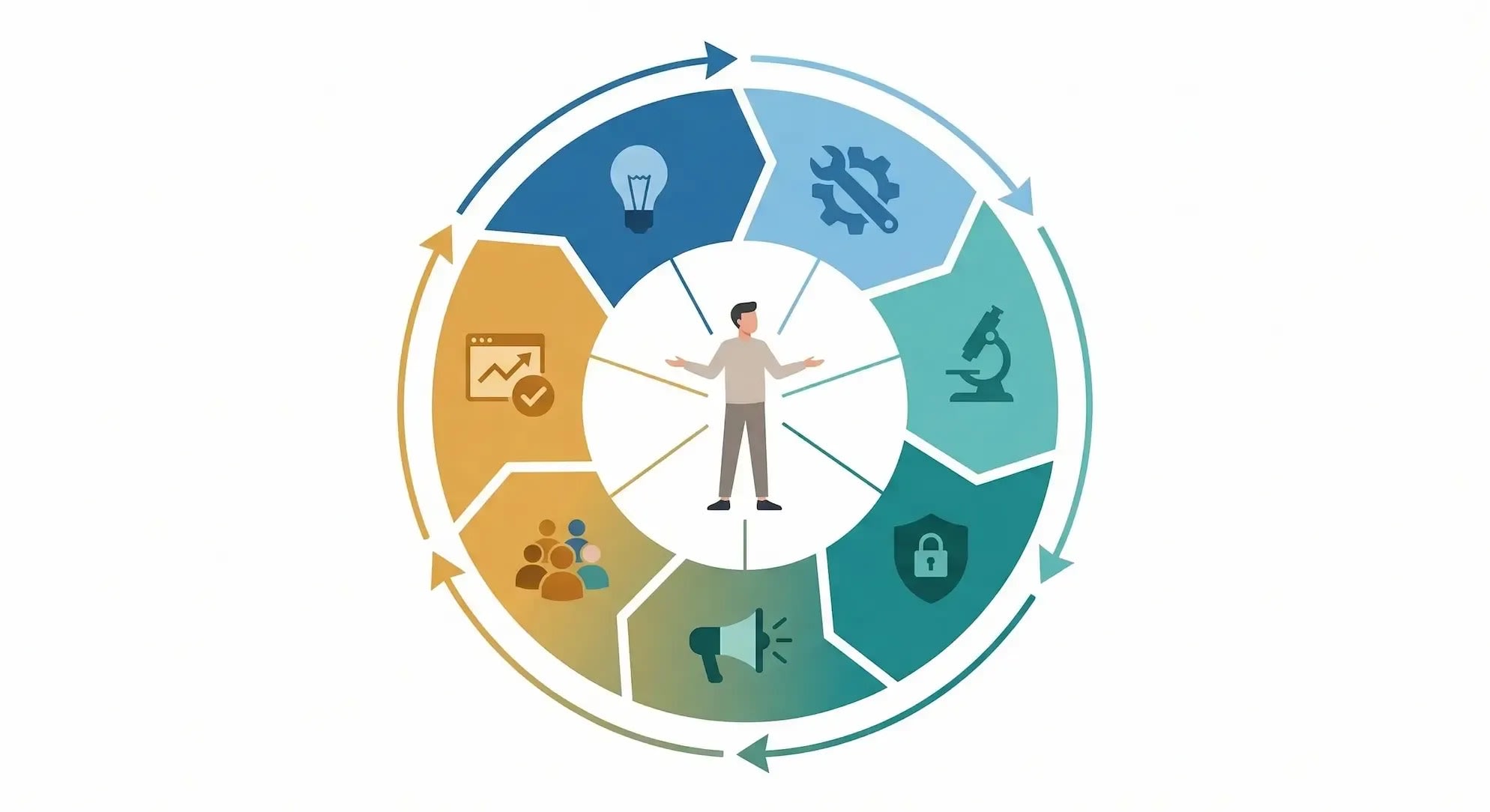
The reason this apprenticeship works differently is scope. Six assessment areas combine into one practitioner who covers the full automation lifecycle.
Not a narrow specialist. A person who can move from identifying an opportunity all the way through to proving it delivered value.
Here is how the skills chain together:
Spots the opportunity and builds the business case
They audit your processes, identify what is worth automating, and present the rationale to stakeholders in language finance directors actually respond to.
Designs and builds the solution
Working across Zapier, Make, and n8n, they construct workflows that connect your existing systems.
Tests it against messy real-world data
Duplicates, missing fields, rate limited APIs, and the kind of data your systems actually produce.
Ensures it complies with governance and regulation
Including GDPR, the EU AI Act, and internal governance processes.
Trains the team to use it
Through quick start guides, walkthrough videos, and practical training sessions.
Measures the return on investment
Reporting clearly on what worked, what improved, and where automation delivered value.
Most organisations would need several specialists to cover this full lifecycle. A consultant, a developer, a trainer, and a compliance specialist.
This programme develops one practitioner who understands all six areas.
Concrete Skills at Graduation
Every skill below links directly to a module in the programme. Nothing theoretical. These are assessed competencies.
Build
Apprentices learn to build:
• Multi step automations across platforms such as Zapier, Make, and n8n
• Data pipelines connecting CRM, accounting, email, and reporting systems
• AI integrated workflows for document processing, sentiment analysis, and content generation
• API integrations and webhook configurations
Think
They develop analytical and critical thinking skills including:
• Prompt engineering from simple prompts to more advanced AI workflows
• Context engineering so AI systems produce reliable outputs
• Critical evaluation of AI outputs using structured review methods
• Process mapping to identify which tasks should and should not be automated
Govern
They learn responsible AI and governance practices including:
• GDPR compliance for automated workflows
• Algorithmic impact assessments
• Bias detection and mitigation techniques
• Creating audit ready governance documentation
Communicate
They also learn how to translate technical work into business value:
• Running stakeholder training sessions for non technical teams
• Creating quick start guides and user documentation
• Reporting ROI using the Time Saved Formula
• Adapting explanations for different audiences within the organisation
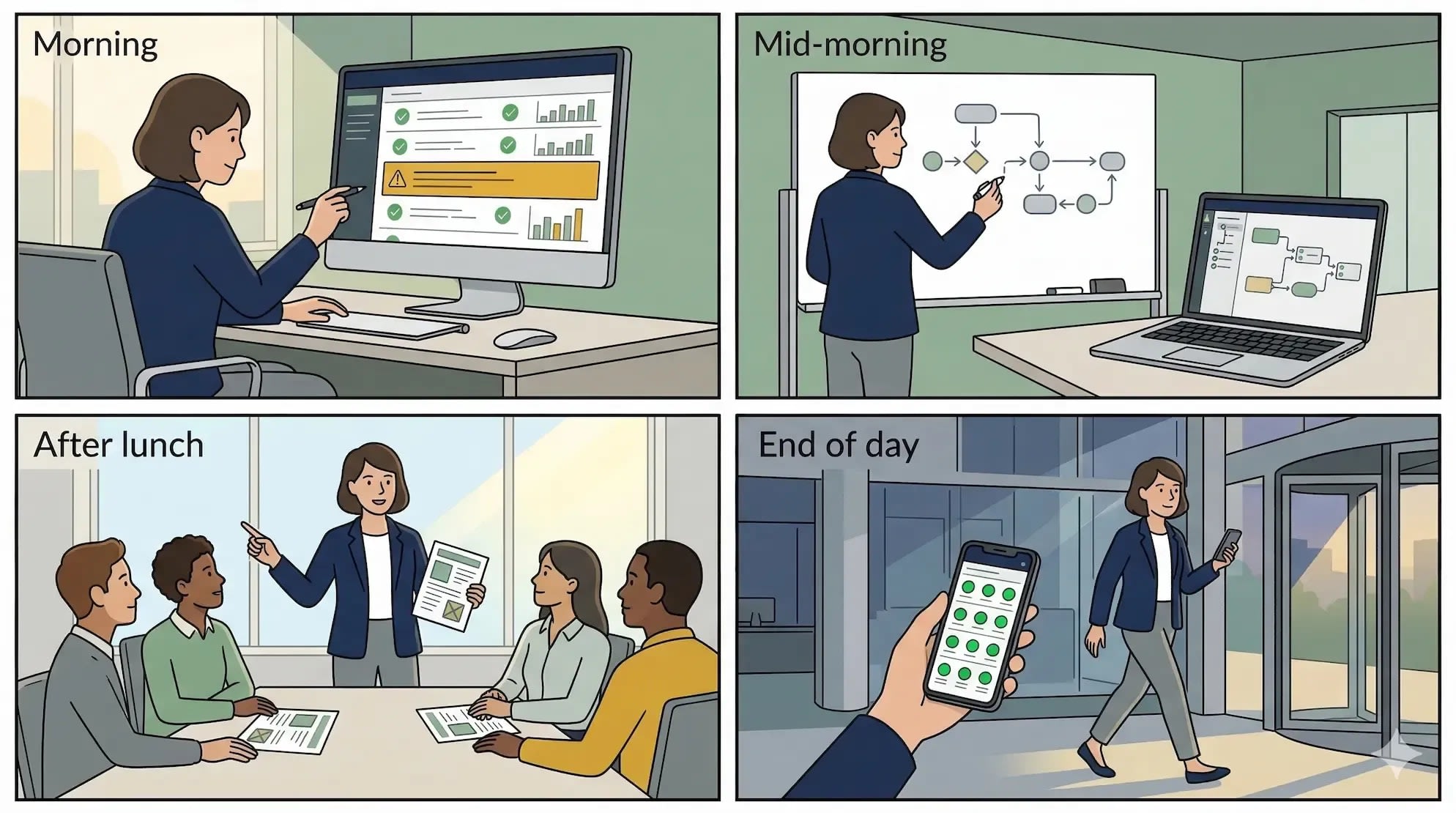
A Day in the Life at Month 12
This is not hypothetical. It reflects the type of work the programme prepares apprentices to deliver.
Morning
The apprentice reviews automated overnight reports generated by an n8n workflow. One anomaly in client data has been flagged for review. She investigates, confirms it is a formatting error from a CRM import, and adjusts the validation rule.
Mid-morning
The operations team requests a new automation connecting the CRM to the email marketing system so new clients trigger a welcome sequence automatically.
She maps the process first using a swimlane diagram, then builds the workflow in Make. The workflow includes conditional logic for different client types and is tested using deliberately messy sample data.
After lunch
She runs a short training session with the sales team explaining how the workflow works. The team receives a one-page guide created earlier that morning.
Afternoon
She documents the automation build for her portfolio, logs off the job training hours, and prioritises the next automation opportunity using the Time Saved Formula.
End of day
She checks the governance dashboard for active workflows. A compliance flag appears for a data retention rule. She investigates, adjusts the setting, and records the change in the audit trail.
Vendor Certifications Earned During the Programme
During the programme apprentices complete over 65 hours of structured vendor learning. These certifications are externally recognised and mapped to the curriculum.
Certifications include:
• Introduction to Modern AI, Cisco Skills for All
• AI Vulnerabilities, Cisco Skills for All
• Foundations of Generative AI, Cisco University
• AI Fundamentals badge, IBM SkillsBuild
• Make automation certificates from Make Academy
• Builder certification from Airtable Academy
• AI App Builder certification from Airtable Academy
• Beginner and intermediate automation courses from n8n
Examples of What They Could Build
Below are examples of real workplace automations the programme prepares apprentices to deliver.
Client onboarding automation
A form submission triggers CRM creation, welcome emails, task assignment, and calendar booking.
Result: Saves approximately four hours per new client.
Weekly reporting dashboard
Data from multiple systems is automatically compiled and distributed every Monday morning.
Result: Removes manual reporting work previously completed each Friday.
AI document processing
Invoices, contracts, and expense receipts are automatically extracted and categorised.
Result: Reduces manual processing by around 80 percent.
CRM data cleanup automation
Duplicate records are detected and corrected automatically.
Result: Maintains clean, reliable CRM data.
Compliance monitoring
Automated checks against internal policies flag issues in real time.
Result: Replaces periodic manual audits with continuous monitoring.
The Tools Will Change. The Thinking Will Not.
Artificial intelligence is evolving faster than most technologies businesses have seen before. The specific tools used today may change quickly.
This is why the programme focuses on frameworks and principles rather than simply teaching where to click in software.
Apprentices learn structured approaches to:
• change management
• prompt engineering
• ROI measurement
• governance and responsible AI
A practitioner who understands these frameworks can quickly adopt new tools as they emerge.
Someone trained only on specific software cannot.
The programme also develops what we call anticipatory intelligence. The ability to recognise emerging opportunities, identify real problems, and evaluate whether new AI tools actually create value.
This capability remains valuable regardless of how technology evolves.
The Gap They Close
Many organisations know they should be using AI. They have read the articles, attended webinars, and purchased software subscriptions.
What they lack is someone who can turn that potential into working systems inside the business.
An AI apprentice fills that gap.
They understand both the technology and the operational context of the organisation.
Unlike an external consultant, they remain within the business. The knowledge stays. The systems continue evolving. The capability compounds over time.
Next Steps
Employers Book a discovery call to explore how an AI apprentice could work within your organisation.
Prospective Apprentices Register your interest to join the next programme cohort.
Frequently Asked Questions
Could an AI Apprentice Transform Your Workflow?
Many organisations know they should be using AI more effectively but lack the internal capability to make it happen. An AI and Automation Practitioner apprentice can help close that gap.